maandag 9 november 2015

The White Knight Jousted Of His Horse

Celebgate And The Ethics Of Journalism In The Online Age


In August 2014, an unknown hacker or group of hackers illegally collected private photographs of over a hundred celebrities or public figures from Apple’s iCloud data storage service and distributed these on the Internet. Among these images were nude or suggestive photographs, taken for private use. Among the victims of the attack were actress Jennifer Lawrence and model Kate Upton (Doom, 2015: 8). This event became known as ‘Celebgate’ or ‘The Fappening’. After the initial release onto webpages Reddit and 4Chan, news of the event spread quickly through mass media. The distribution of these images and the way the media responded to them raises some interesting questions about the way journalism has changed. Do journalists still have the same role in deciding what content circulates in the public domain? Should all information be available to everyone and free? How do journalists cope with the lack of accountability users have? What kinds of currency do journalists deal with? All of these questions will be explored in this blog, with a special attention for the ethical aspects of these problems, using the following concepts: ‘the end of anticipation’ by Naomi Baron, cultural currency, and ‘secondary gatekeeping’ by Jane Singer. We will show that the role of journalists as gatekeepers has changed because of the influence of users. User-generated visibility pressures journalists to abandon their ethical judgement, even though this is one of the main characteristics that journalists use to distinguish themselves from publishers. Lastly, we will argue that responsibility of audiences may have transformative effects on society.
Naomi Baron states that language technologies have transformed the way we interact socially with each other. According to her, through technology we don't have to wait until we are physically together to have contact, instead we share our stories virtually. She calls this ‘the end of anticipation’. This notion can also be applied differently in relation to Celebgate if we connect it to Folker Hanusch’s article on the representation of death in the online age. He states that, on the Internet, everyone expects news and information to be free (Hanusch, 2010: 146). On top of that, he quotes research that found that commitment to freedom of expression was one of the reasons people seek out representations of death online (Hanusch, 2010: 153). This relates to the meme of ‘Information wants to be free’, a sentence first uttered by Stewart Brand. The quote has been interpreted and used in many ways, because, as it befits a meme, it started to have its own life. It became related to the Hacker Ethic. As Stephen Levy states: ‘The phrase has been described as “a battle cry for the relentless march of the Internet”; “The single dominant ethic in this [digital] community”; and “the defining slogan of the information age.”’ For some it became a mantra, an ideology, or even a religion. So, arguably, the end of anticipation also applies to the desire and expectation that every piece of information should be available to anyone. No information should be out of reach. This might have very well been the ethic with which the hackers who released the images of Celebgate justified their actions.
This creates ethical dilemmas for journalists. Their role has changed because of the fact that now anyone with an Internet connection is able to publish news (Hanusch, 2010: 145). As Jane Singer states, in response to this journalists seek to differentiate between publishing and journalism. Journalism, stated as an occupation in opposition to publishing (which anyone can do), relies on news judgement, norms, and practices of verification (Singer, 2013: 57). This means that exactly their ethic is one of the things that distinguishes journalists. Because of the ‘lack of accountability’ of users, which lies in the ability to provide content anonymously, user-generated content can be inaccurate, irrelevant, offensive, and/or badly written (Singer, 2013: 59). The problem that emerges from this is that journalists are pressured to abandon their ethic. Celebgate illustrates this problem. Apart from the content that was published, the reactions also highlight this lack of accountability. As Eric Johnson argues, ‘Ultimately, this was a virtual sex crime in which men sought to outdo one another and gain popularity for themselves through the objectification of women’s bodies.’ The upvote feature on the websites Reddit and 4chan, to which the images were first released, showed that the more dehumanizing and demeaning the commentary about women, the more popular it would be (Johnson, 2014). This can be related to the idea that links and recommendations have become a new form of cultural currency (Singer, 2013: 57). Johnson specifies this currency for the commenters on Reddit and 4Chan as ‘lulz’ (the phonetic plural form of LOL, or laugh out loud). This belongs to a culture he defines as ‘a digital remixing of schadenfreude in which the misfortune of others is publicly exploited for maximum amusement and personal prestige.’
Of course, ‘lulz’ are not the currency journalists aim for, but the currency of links and recommendations is something they are dependent on. This ties in with the notion of ‘gatekeeping’. Gatekeeping is a ‘regime of control’ that determines what content is allowed to enter public circulation (Singer, 2013: 56). Journalists are part of this regime of control and choices are determined by an interpretive community (Singer, 2013: 56). However, links and recommendations have become a cultural currency, because users have become ‘secondary gatekeepers’ (Singer, 2013: 56). This means that in an open media environment the gatekeeping process involves more participants and ‘journalists perceptions of the newsworthiness of an event interact with the reader’s perceptions of its personal relevance’ (Singer, 2013: 57). This creates an user-generated visibility that journalists must abide by and are dependent on. In the case of Celebgate, this created pressure on journalists to cover the event. As Hanusch argues, images are often chosen on the basis of what the competition may have (Hanusch, 2010: 159). So, even though journalists may have had ethical reservations about publishing articles on the leaked Celebgate images, their competitors and users exhibited that there was a demand for them, which led others to publishing it as well. A sort of ethical middle-ground is not publishing the images, but providing a link to them, so readers can decide for themselves if they want to view them, as often happens when it concerns graphic images of death and violence (Trend, 2007: 149). According to David Trend, in this way the responsibility for selection is placed back on audiences (Trend, 2007: 160). In this way former gatekeepers have become gatewatchers (Hanusch, 2010: 56) and now instead of actively avoiding graphic images, readers need to actively seek them out (Trend, 2007: 149).
This notion of responsibility of audiences brings us to another side of Celebgate. As Trend argues, interpretations differ among audiences and critical viewing reveals when violence is unneeded, wrong, or out of place (Trend, 2007: 123). Despite of the significant amount of people who enjoyed the leak or depicted it as a scandal, there were also a lot of statements that denounced it, providing a different perspective that sided with the victims.  As Trend states, ‘messages that depict violence are powerful because they project a societal view, a perspective on how people can (or should) behave, act, or feel’ (Trend, 2007: 123). In this way, he states, media naturalize violence. Of course, nudity is not the same as violence, but they can both be categorized as graphic images and because of that the dynamics involved in the publication of such images are similar in some respects. This also relates to Habermas’ notion of the ‘public sphere’. Hanusch states that through new media, journalism can be democratized and ‘reclaimed from what are deemed all-powerful media corporations.’ (Hanusch, 147) So, if we apply this to the way media portrayed Celebgate, we see that if mainstream media judge it as a scandal, recommending women to not take nude pictures in order for them not to be stolen, this view may become naturalized. However, because of the dynamics of secondary gatekeeping and user-generated content, it became possible to voice another opinion on Celebgate and in this way influence and even transform the societal view on it.
In conclusion, we showed that relating the notion of ‘the end of anticipation’ to the slogan ‘Information wants to be free’ explains the desire and expectation that every piece of information should be available to anyone. This leads to a justification of events like Celebgate, which is made easier because of the lack of accountability users enjoy, in contrast to journalists. This puts journalists on a challenging crossroads. On the one hand, they distinguish journalism from publishing by their ethics (among other things), but on the other hand, they are under pressure because the information that they would withhold because of ethical reasons is available elsewhere anyway. This pressure originates from the notion of user-generated visibility that relates to a new cultural currency consisting of links and recommendations. The original role of gatekeepers journalists now have to share with users, who function as secondary gatekeepers through this process of sharing and recommending. This places the responsibility of selection back on audiences, which sometimes allows voices deviant from mainstream media to become heard and impact society. Journalists have to find a way to adjust to their new role and to cope with the challenges they face.


Discussion: Journalists can no longer hold on to a ‘white knight’ ethic, because user-generated visibility pressures them to follow the decrees of secondary gatewatchers.


B.L., E.K., L.C., N.R., R.H.


________________________________________________________________________


Bibliography

Doom, J. (2015) ‘The New Porn Platform: Standards Gaps in ‘Revenge Porn’ Policy and Protection’, in: gnovis Journal. Volume XV(2): 1-13.  

Hanusch, F. (2010) ‘Representing Death in the Online Age’, in: Representing Death in the News: Journalism, Media and Mortality. Basingstoke: Palgrave Macmillan: 145-160.

Levy, S. (2014) ‘Hackers at 30’, Backchannel. https://medium.com/backchannel/the-definitive-story-of-information-wants-to-be-free-a8d95427641c (6 November 2015).

Singer, J. (2013) ‘User-generated visibility: Secondary gatekeeping in a shared media space’, in: New Media and Society. Vol. 16(1): 55–73.


Trend, D. (2007) ‘But We Can Understand It: Beyond Polemics in the Media Violence Debate’, in: The Myth of Media Violence: A Critical Introduction. Malden, Oxford & Carlton: Blackwell Publishing: 108-123.

maandag 2 november 2015

Critique through selection: Film festivals as an alternative to criticism

Choices, isn’t it nice that some are made for you? Are you struggling to find a new series to binge watch during your autumn break? Netflix will give you a list of options based on your past consumption. Are you sick of listening to the same songs over and over? Spotify will have a new dose lined-up for you every week. These, however, are the media promoting themselves, a judgement of value incorporated in the warm relationship between producer and distributer (let alone being one and the same). No, a self-respecting cultural studies master student should take a more critical and wary stance. By reading into other people’s opinions, valuing ratings and measuring the hype against the well-advised views of the connoisseur we can formulate our own. While making up our mind, by reading others’, aren’t we missing something? Who are these people to tell something about some movie or album? According to Plato, the artist is reprehensible, for he is not an expert of the things he mimics (Baumeister, 2015: 71). Does this make the art-critique even more otiose?
In this blog we will analyze a possible alternative to the mass critique that has been clouding cultural productions. A move away from the current critique-consumption relation could give space to a new perspective, which might be less objective, but more transparent than the (insert number) out of five stars which scatter the World Wide Web. Kember and Zylinska regret the current state of affairs when it comes the criticism in the creative industries and search for an alternative. Their aim is 'to stage a new paradigm not only for doing media critique-as-media analysis but also for inventing (new) media' (Kember and Zylinska, 2012: 189). Using Deleuze and Bergson they argue that the creative agency of the critic producer should extend beyond individual and collective creators and that the creative potentiality of media themselves should be incorporated in the discourse (idem: 178). Channeling Butler, they state that critique is more than just fault-finding: it is a ‘creative practice that temporarily suspends judgement but ultimately requires a decision’ (idem: 184). This will then result in a new recomposition, or moreover, theory of invention and inventing well (idem: 184). In their concept of ‘critical attention’ Kember and Zylinska combine this notion of critique with a systematic and networked model of human-nonhuman relations through which they believe it is possible to wrestle ‘creativity’ away from the dominant economic framework that reaffirms the dichotomous model of the cultural industries of dominant cultural production versus alternatives (idem: 176).  

Although their manifesto is very idealistic, there are some initiatives that might be seen in light of Kember and Zylinska’s text. Let’s take a look at Nijmegen’s very own organization Go Short. With its eight consecutive edition in sight for their short film festival, they have made quite a name for themselves. Next to this they organise short film related events, highlight films in their weekly blog and fight for one of their goals, namely: reinstating the ‘voorfilm’ (pre-movie). Their beliefs are reflected in the films they choose to show during the festival, or to promote during their many events throughout the year. Go Short is far from being the only festival who try to work on alternative ways of consuming films. Although, being a niche market they have a rather luxurious position, to which we will come back later on.

In a Q&A with Nick Hortentius, one of the programmers during the LIFF (Leiden International Film Festival) we soon discovered that they are looking for a strong identity as a festival as well, which is reflected in their choice of films. Most of the films which end up on this festival have been screened during other festivals such as Cannes, Berlin Film Festival and Sundance, which the programmers of LIFF dutifully visit yearly to get the cream of the crop. Notice that there is another form of criticism at work in this case, less visible to the audience. There is no longer a judgement of value by some art critic, but a selection (or censorship) of movies which are all deemed worthy by the programmers. They tend to emphasize what films should be like instead of what they shouldn’t be, in contrast to most of the critical approaches found by reviewers. This is exactly what is meant in Kember and Zylinska’s manifesto on the role of criticism. According to them the way criticism talks about media is alienating, putting creativity in the centre of the discussion as if it is something measurable. However, Hortentius had to come back to his statement later on, expressing his irritation towards distributors which pressured them to accept certain films in order to get others: ‘It is hard when you don’t get the movies you want, as well as getting the ones you don’t want’ (Hortentius, 2015).   
LIFF isn’t the only one encountering these distortions due to this contamination of their identity. InScience, a debuting festival starting this very week, is seemingly seeking the balance between their integrity and attracting enough visitors for the first edition, thus surviving. With blockbusters like Interstellar and Inside Out listed on their programmes they fall out of line with other festivals, but they are not in the position of putting principles above reaching a broad audience. During one of the preparatory meetings InScience’s director Johan van de Woestijne claimed the earlier mentioned titles fitted perfectly in their vision: the relationship between science and film. Would these films been shown if they didn’t get the widespread critical esteem they enjoy at this point?


To get back to Go Short, their situation is somewhat different. They dominantly screen short films which have been adduced by the filmmakers and/or producers, instead of actively looking for films which is more the case with LIFF. This competition element cuts both ways, having the luxury of getting a lot of material on offer and selecting them on quality. This is probably due to the fact that short films are far less popular outside of these festivals and therefore a less interesting market for distributors and cinemas. The earlier mentioned ‘Mediation of Things’ is not as present as described by Raul Rodriguez-Ferrandiz in the manner of display by Go Short. Short films are less of a brand, storytelling as a symbolization of commodities as living, changing and evolving entities isn’t as determining for the object (Rodriguez-Ferrandiz, 2014: 330). The artefact-like quality for the short films is different from the full-length feature films in that they are less repetitive in nature compared to the daily screenings in mainstream cinemas. When a movie is bought by a distributor it will become available to a very large audience who can visit these films in numerous locations over a relative large amount of time. During film festivals the screenings are limited down to one one or at the most a few. This experience culture is emphasized in both the LIFF and InScience as well, stressing their festival as a unique way of enjoying films. Their selection, the choices they made for you, symbolise the brand of the festival as a whole instead of small singular events.
The turnaround in the approach of cultural products as praised by Kember and Zylinska might not be as dominant as they might have hoped, but film festivals certainly take on another stance when it comes to criticism. By selecting movies, instead of judging them, they send out a much more positive image of the media, no nagging but praising. On top of that, through the critical attention with which Go Short puts films in the spotlight, it moves beyond the intentionality of the people behind the festival and allows the medium to have an impact on its audience and beyond them. ‘It is via points of temporary stabilization between human, corporeal, and technical agency that partial decision are being made, connections between bodies are being established, aesthetic and political transformed is being achieved, and power is taking effect of different parts of ‘the network’ in a differential manner.’ (Kember and Zylinska, 2012: 200) Although we should take into account that this free form is still very dependent from the rest of the industry, it is moving into the direction Kember and Zylinska are hoping for. Ironically enough though visitors of LIFF were asked for their opinion after the screenings, handing them a piece of paper on which they could rate the film, on a scale of 1 to 5.


B.L., E.K., L.C., N.R., R.H.


Thesis proposal:
Can the innovation of Go Short really be the alternative contemporary criticism?


Bibliography


Baumeister, Thomas (2005) De filosofie van de kunsten: van Plato tot Beuys, Amstelveen: Damon.

Kember, Sarah & Zylinska, Joanna (2012) ‘Remediating Creativity: Performance, Invention, Critique’, in: Life After New Media: Mediation as a Vital Process. Cambridge: The MIT Press: 173-200.

Q&A with Nick Hortentius (31 October 2015) Leiden: CJP serveert @ LIFF.

Rodrígez-Ferrándiz, Raul (2014), ‘Culture Industries in a Postindustrial Age: Entertainment, Leisure, Creativity, Design’, in: Critical Studies in Media Communication 31 (4): 327-341.

Ruber, Kirsten (2015) Go Short Jaarverslag 2014-2015. http://issuu.com/goshortfilmfestival/docs/go_short_jaarverslag_2015__pages_/39?e=0/30120147 (27 October 2015).


Speech Johan van de Woestijne (26 October 2015) Nijmegen: volunteer meeting InScience International Film Festival.

maandag 12 oktober 2015

Giving voice to media production


From the mid 1970s on the production of media has seen numerous changes that have been described using many overlapping concepts, such as flexible accumulation, network society, and digital capitalism (Mayer, 2013: 5). All of these are related to policies broadly defined as neoliberalism (Mayer, 2013: 5). As Hesmondhalgh and Baker, drawing on Menger (2006), point out, creative work has become characterised by ‘extreme flexibility, autonomy, tolerance of inequality, innovative forms of teamwork’ (Hesmondhalgh and Baker 2011: 387). Adding to this, Deuze articulates that workstyles in the media are defined by ‘informal networks among generally short-term (and often freelance) employed professionals within a broader industry dominated by project-based work (Deuze, 2007: 61). Although this kind of work brings more autonomy it also poses its challenges. In this blog we will critically analyze freelance creative work by drawing on the works of Hesmondhalgh and Baker, Mayer, and Deuze on media production. In order to do this, we will give voice to someone who personally experienced the transition in the market. Moving along the timeline of Ricardo Hippert’s work experience we will address concepts like autonomy, digitalization, project-based work, convergence, and explore two initiatives that respond to these changes in different ways: Elance and SEBRAE.


Ricardo Hippert, a 44 year old graphic designer from Brazil and exchange student at Radboud University, shared some of his experiences of working in the creative sector in Rio de Janeiro. Over a cup of coffee, he told us about his life before he came to the Netherlands.


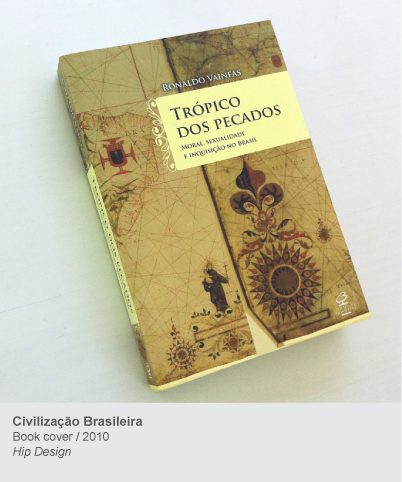
“I started working for Design Studio Eg. Design (http://egdesign.com.br/) in Rio de Janeiro as an intern in 1994. After my graduation in 1995, when I obtained my bachelor in Graphic Design at the Federal University in Rio, I became junior designer and later on senior designer.” He shows us his website (www.hipdesign.com.br): “In 2008 I left the studio to start my own company: Hip Design”. His company still thrives today, but to the question whether he misses his job at Eg. Design, he answers full heartedly: “Yes”.  Hippert sketches a nice, warm environment in the studio of Eg. Design, where there was no rigid hierarchy, but a community of professionals collaborating on projects and managing clients. This type of ‘soft-control’ is often seen as essential to creative labour (Hartley et al., 2013:63). Among others he worked for the largest TV channel in Brazil, made book covers for several publishers and he collaborated with journalists. This illustrates what Deuze points out as the networked character of the media production process that encompasses many industries outsourcing various elements in the production process to save costs and redistribute risks (Deuze, 2007: 58). During his years at the studio, Hippert witnessed a series of changes in the creative industries.


ta-na-roda.png


With digitalization, the Internet and commodification of creativity came less formal working conditions and a high rate of entrepreneurship (Deuze, 2007: 50). He underlines the digitalization he witnessed in the early 1990s when the personal computer became much more accessible. “Access to Intel 386/486 microprocessor powered PC’s (http://www.cpu-world.com/) and graphic softwares like CorelDRAW (http://community.coreldraw.com/) flooded the market with people that started to consider themselves as designers.” This development is marked by others as the ‘cult of the amateur’ (Hartley et al., 2013: 100), that brought the illusion that performing design was just related to mixing beautiful fonts with vivid colours. “Gradually some clients didn’t recognize the real work behind a logotype, a folder or a CD cover. Much more than fonts and colours, it is related to the understanding of the client’s needs, developing a concept, translating this into graphics and delivering it correctly to production. Also the printing process became more accessible with copy shops businesses opening everywhere, dismissing the designer’s technical knowledge.” And so, a new model of social structure was taking form and created new patterns framing the creative industries (Mayer, 2013: 3). As we see today, this change brought new proportions to human agency and media production that is now embedded in our domestic life. Producing media like books, CDs or magazines is widely achievable with the help of digital platforms and dozens of DIY tutorials on the Internet (Mayer, 2013:13).


In 2008 Hippert started his own company and started working from his home office. In addition to his own clients he collaborated with other companies, including his former employer Eg. Design. As Deuze states ‘these kind of project-based inter- and intracompany strategic alliances are typical for work [in] the creative industries’ (Deuze, 2007: 60). According to Hippert, this corresponds to a shift in employment, “you hire a company instead of an individual and thereby, it becomes a business to business relation and no longer a  boss-employee relationship”. In 2011 Eg. Design followed the same path and operated from the owners’ home office. “The main reasons were the expenses of renting a studio, high taxes and the competition with other graphic designers.” This was made possible through two intertwined processes that have a profound impact on media production: convergence of place and convergence of technology (Deuze, 2007: 70). The computer has become an ‘universal machine’ that integrates work and play. Because of this, the boundary between home and office loses its significance (Deuze, 2007: 70).


tropico-dos-pecados.png
Hippert calls attention to a recent development of the platform Elance, an Upwork company. Through this platform clients and freelancers can ‘hire and work with the world’s most talented independent professionals’ (https://www.elance.com). “Elance is a new independent and parallel world with its own dynamics and rules, powered by the Internet and a system that provides a trusted workplace. It brings a concept of a globalised community.” Hippert adds with a smile, “Elance is just becoming a new opponent, unless I decide to work inside its framework and its own competitive market.”


Hippert points to another initiative. “SEBRAE (Brazilian Micro and Small Business Support Service) (www.sebrae.com.br) is a non-profit private entity that promotes the sustainable and competitive development of small businesses. Its framework provides subsidy in the areas of design, innovation, productivity, intellectual property, quality, sustainability and ICT.” So, SEBRAE holds positive consequences for both clients, providers, and the Brazilian economy as a whole, since small businesses generate 52% of employment in Brazil (www.sebrae.com.br). Hippert’s company is one of the registered providers: “the framework is very fair since regulated services costs are compatible with the marketplace, much more so than the Elance system.”


Although there are many more issues related to media production that are worth discussing, the interview with Hippert draws attention to some of the key changes in creative labour and some of the challenges of freelance creative work. Hippert misses the collaborative atmosphere at the studio during his years at Eg. Design, a business model too expensive in the competitive neoliberal market. Because of ‘the cult of the amateur’ and severe competition with other companies, working as a project-based entrepreneur from an home-based office is almost unavoidable. This provides autonomy and freedom, but presents insecurities and risks as well. Hippert provided us with the examples of Elance and SEBRAE, two platforms that respond differently to the challenges of freelance creative work. But still, even with the help of platforms such as SEBRAE, he sometimes finds himself struggling as a creative worker. However, he remains hopeful for the future. “There is much to come and I hold an optimistic view about the way creative workers are joining in creative clusters to seek new opportunities together”.


B.L., E.K., L.C., N.R., R.H.

Thesis: Keeping ‘the cult of the amateur’ in mind, are initiatives like Elance a threat or an opportunity for creative professionals?


Literature

Deuze, M. (2007), ‘Creative Industries, Convergence Culture and Media Work’, in: Media Work. Cambridge & Malden: polity

Hartley, J., Potts, J., Cunningham, S., Flew, T., Keane, M. & Banks, J. (Red.). (2013) Key concepts in Creative Industries London: Sage Publications

Hesmondhalgh, D. & Baker, S. (2011), ‘Toward a Political Economy of Labor in the Media Industries’, in: Janet Wasko, Gragham Murdock & Helena Sousa (eds.), The Handbook of Political Economy of Communications. Blackwell Publishing

Mayer, V. (2013), ‘Making Media Production Visible’, in: Vicki Mayer (ed.), The International Encyclopedia of Media Studies, Volume II: Media Production. Blackwell Publishing, 2013.


Websites:
http://egdesign.com.br/ (Oktober 10, 2015)
http://www.hipdesign.com.br/  (Oktober 10, 2015)
http://www.sebrae.com.br/sites/PortalSebrae/canais_adicionais/sebrae_english (Oktober 12, 2015)


maandag 5 oktober 2015

Welcome to Amélieland Paris !

     "Welcome to the quartier of Amélie Poulain" is the sentence that greets tourists in rue Lepic, one of the common Montmartre places in the famous French film Amélie (2001) directed by Jean-Pierre Jeunet. The film that succeeded to transcend the boundaries of the French cinema market was exported internationally with more than 23 millions entrance tickets sold. Consequently, the Amélie phenomenon has exceeded the status of national success and has become a kind of symbol of French culture and the French film industry in the world. Through the case of Jeunet's film we will explore and question the process of appropriation theorized by Stijn Reijnders in 'Places of the imagination: an ethnography of the TV detective tour' and analyze the city of Paris as a "Global Media Capital" as well as the French cinema industry through the particular policy of cultural exception.


   Amélie tells the story of a thirty-year-old woman living in the romantic district of Montmartre in Paris. As a waitress, Amélie spends her time observing people’s lives and lets her imagination create her own world. Joyful and optimistic as she is, she decides to do good around her, by cunning stratagems she spreads love and happiness in the life of the inhabitants of Montmartre. Obviously, in her quest for altruism Amélie finally meets prince charming and finds her own happy ending. The film as a modern fairy tale conveys a fantasist atmosphere and superimposes the real world of Paris and the historical district of Montmartre with the fairytale world of Amélie. Even today, almost fifteen years after the release of Amélie the fascination for the film and its characters is still present. Thus, for many tourists visiting Paris their image of the city is determined by this film. They go to see the city of Amélie. This phenomenon is called media pilgrimage. For this reason the municipality of Paris created a page on its website to explain the route of Amélie in Montmartre: from Rue Lepic to Café des Deux Moulins, including Sacré-Coeur basilica and Saint-Martin canal, so both fans of the film and neophytes can explore the film’s key places in real life.  

   To better understand this fascination for the Paris of Amélie, let's introduce the concept of Stijn Reijnders elaborating on the theorization of Nora about the need of memorization in our society. According to Pierre Nora, modern society is characterized by its obsession with the past. In this idea he introduces the term of "lieux de mémoire" (places of memory/remembrance) to refer to places that can function as memorials. From this starting point, Reijnders creates the second concept of "lieux d'imagination". What he calls "lieux d'imagination" are references which enable to construct and cross the boundary between an imagined and a real world. Thus, this boundary between what is “inside” and “outside” the media, the unreal and real world created by the media, can be transcended by tourists thanks to the process of media pilgrimage. In Amélie's case, we can see that the locations in the actual Montmartre are used for memorializing and reliving the fictional events of the film. Rue Lepic, the principal street of the movie where Amélie lives or the Café des Deux Moulins where Amélie works consequently become symbolic places. 
    Even some famous French touristic guides of Paris (Michelin, Le Routard) redraw a kind of Amélie Poulain's tour in Montmartre. Amélie creates a diegetic world in which the fans to go further in the core of the narrative. The appropriation by the municipality and touristic guides with the creation of a media pilgrimage, the Amélie’s Tour, creates a new reading of the city.


    The explanation of this unusual success can be found in the particular character of the French film industry and the dynamism of the capital. Indeed, Paris is a cultural and creative centre for the French cultural film production, a favorite place of filming, and it houses more than a hundred theatres which correspond to around three hundred of performances every week. The dynamism of the city, as the core of the French cultural industries, also comes from the proliferation of cultural places: almost two hundred museums, exhibitions and plenty of historical and touristic locations such as the famous district of Montmartre, the backdrop of Amélie. As a creative city, it attracts artists and what Richard Florida calls the "Creative Class": 

"People in science and engineering, architecture and design, education, arts, music and entertainment whose economic function is to create new ideas, new technology, and new creative content."

   Consequently, according to Michael Curtin, we can consider Paris a "Global Media Capital" because of its logic of accumulation: merging media and culture. But also as a real reservoir of creativity, creating creative migrations towards the idea of Creative Class who are appealed by the cultural dynamism. However, if Paris is a real cultural capital for the rest of France we can observe that at an international level, the influence of French cultural products is to a lesser extent. Indeed, through globalization, American goods also take a huge place within the French market. American films are more numerous than French ones in corresponding to a half of the distribution. In consequence, the French government tries to play a significant role in protecting French culture and securing the pivotal role of the cultural industries in the market. Financial support is provided thanks to a national institution devoted to the cinema since the end of the Second World War: the CNC (National Center of Cinematography). Moreover, a cultural policy was introduced to preserve French culture including the French cinema industry, this is the principle of "cultural exception". The cultural exception concept was principally launched in order to preserve the cultural goods from the hollywoodian wave and establishes a quota of French films broadcasted on television.


    Returning to the dream like setting of Amélie, this film conveys a stereotypical, nostalgic and idealized view of Paris. It is a dream-like and imaginary Paris, colorful and proper where neighbours know each other. There is no conflict in the world of Amélie apart from personal problems that are happily solved by the protagonist. Consequently, the international success of Amélie can also come from its content and the idealized and stereotypical view of France. This particular view puts it in the general perspective of the manipulation of the masses by the media which can have harmful effects. In this way, tourists who have unrealistic expectations of Paris suffer from a psychological syndrome associated to the cultural shock they experience: the "Paris syndrome". Mostly Japanese, these tourists suffer of a psychiatric breakdown when confronted with the reality of the Western megalopolis.

   The world of Amélie has spread its boundaries over the existence of a simple film. Through a Montmartre tour, fans can confront real and imagined world in the key locations of the film in the actual city of Paris. This media pilgrimage is due to the film’s international success. This success can be ascribed to different aspects. Firstly it succeeded because of the dynamism of the capital as a creative and cultural city as well as the important support provided by the French government and secondly, by contributing to the idealization and disneyfication of Paris. Nevertheless, the gap between the real and imagined world can be too huge and the confrontation does not always proceed as smoothly as desired.


B.L., E.K., L.C., N.R., R.H.


Thesis proposal: The media love fairy tales


Literature

Curtin, Michael. "Global Media Capital and Local Media Policy" In The Handbook of Political Economy of Communications by  Janet Wasko, Gragham Murdock, and Helena Sousa. Blackwell Publishing Ltd, 2011.

Rejinders, Stijn. "Places of the imagination: an ethnography of the TV detective tour" In Cultural Geographies, 2010.

Websites